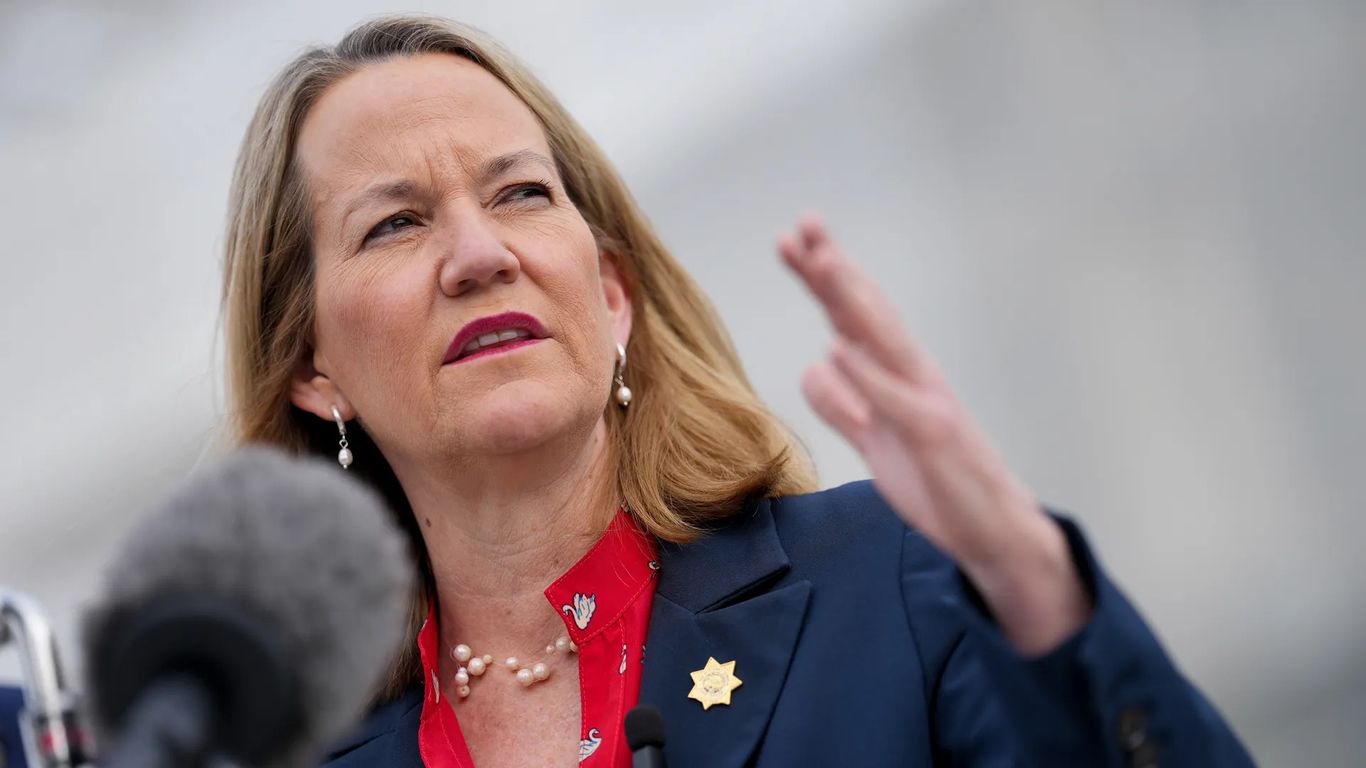
Opinion: Arizona Attorney General’s Bold Appeal in the “Fake Electors” Case
The recent decision by Arizona Attorney General Kris Mayes to appeal the “fake electors” case to the state Supreme Court marks a significant moment in the legal landscape of our state. This appeal comes after a lower court requested that she resubmit her findings to a grand jury. As Arizona’s chief law enforcement officer, Mayes has repeatedly stressed her commitment to upholding the law, ensuring that even the most tangled issues are addressed properly and fairly. By challenging the court’s earlier decision, Mayes is not only standing up for the rule of law but is also defending the autonomy of a grand jury’s findings that charged 18 individuals with forgery, fraud, and conspiracy related to false claims regarding the outcome of a presidential election.
At its core, this case represents a broader debate about the balance between legal procedure and political claims during electoral processes. The appeal underlines the importance of adhering to well-established legal frameworks, even when the underlying evidence appears to be mired in confusing bits and intimidating challenges. In this opinion editorial, we will get into the fine details of this appeal, examine the impact of the Electoral Count Act on the case, and consider what this means for the way America deals with contested evidence, political accountability, and the functioning of a grand jury.
Understanding the Grand Jury’s Role in the Process
The involvement of a grand jury in this case cannot be understated. A grand jury, comprised of ordinary Arizonans, played a crucial role in determining that there was enough cause to charge the defendants with the alleged crimes. The traditional role of a grand jury is to evaluate evidence that has been submitted by prosecutors, and to decide whether or not that evidence justifies bringing formal charges. In the current appeal, the argument is made that the grand jury had already weighed the available evidence – both the facts and the relevant law – and reached a conclusion that should stand.
While the appellate process might seem, at first glance, to complicate a straightforward decision, it is essential to understand that courts sometimes send cases back to grand juries when there is a concern that evidence or legal instructions were not presented in a way that fully informs the jury members. Such occurrences, though infrequent, remind us that even the seemingly simple parts of our legal system contain twists and turns that require constant vigilance to ensure fairness.
- The grand jury’s independence in evaluating evidence is key to public trust in the judicial process.
- Its findings carry significant weight when they are rooted in both documented facts and well-established law.
- Court orders to resubmit evidence can be seen as a necessary step to ensure that every little detail has been sufficiently examined.
It is clear that choosing to stand by the grand jury’s decision is a strategic move by Attorney General Mayes. In doing so, she emphasizes that every defendant must be held accountable by the unyielding standards of our legal system, regardless of the politically charged environment surrounding the case.
Legal Governance Under the Electoral Count Act
The Electoral Count Act, which governs the certification process in presidential contests, is at the heart of the defendants’ legal strategy in claiming that their actions were lawful. This Act sets out the rules for how electoral votes are counted and certifies the results of an election. The case has placed this law under a magnifying glass, as it raises questions about the extent to which legal technicalities can be used to challenge established electoral outcomes.
In the context of the “fake electors” case, the act is being interpreted by both the defense and the prosecution, albeit in sharply contrasting ways. The defense points to certain provisions to argue that the actions taken by the defendants were within the bounds of statutory authority, while the prosecution insists that the document falsely claiming a victory in Arizona was fabricated with intent to deceive.
- Clear Guidelines: The Electoral Count Act provides a set of clear, though sometimes intimidating, rules for certifying election outcomes. The defenders claim that this framework gives them a path to challenge the election results.
- Misinterpretation and the Tricky Parts: Critics argue that the defense’s reliance on the act involves a misinterpretation of its intended purpose. They assert that the supposed compliance with the act does not shield actions that are fundamentally rooted in deception.
- Legal Precedents: This case is likely to generate further debate on how strictly or liberally the Act should be interpreted in politically sensitive contexts, especially as similar claims surface in other states.
By appealing the decision to return the case to the grand jury, Mayes is taking a stance that the fine points of the Electoral Count Act cannot and should not be exploited to undermine the integrity of the electoral process. This situation invites legal experts and political commentators alike to take a closer look at the hidden complexities of the act and to evaluate its role in upholding democratic values.
Balancing Political Implications and Legal Accountability
The legal battles surrounding the so-called “fake electors” case have significant political implications. With 18 Republicans charged—including individuals connected to high-profile political figures—the case represents a collision between legal procedures and high-stakes politics. The numbers tell a story of a system trying to reckon with acts that some view as an explicit challenge to democratic norms.
This tension between political maneuvering and strict adherence to the law is one that has been seen before. What makes this instance particularly loaded with issues is the charge of using fraudulent documents to influence the certification of the presidential election. In a time when misinformation and unfounded claims are rampant, confirming the authenticity and intent of every piece of evidence becomes even more critical.
- Charged Individuals: The 18 defendants include 11 Republicans who submitted contrived documentation, two former aides, and five lawyers linked to a former president. Their involvement underscores a network of individuals willing to engage in off-putting, orchestrated efforts that risk undermining the authority of electoral institutions.
- Political Ramifications: Although former President Trump was not charged in Arizona, the reference to him as an unindicted co-conspirator in the indictment hints at a wider web of political associations and motivations behind the case.
- Defendant Accountability: The insistence by Attorney General Mayes on holding the defendants accountable is driven by a broader notion that legal accountability must prevail over partisan interests in order to safeguard the democratic process.
In effect, this case prompts us to consider the difficult balance between legal interpretation and the ideology it sometimes serves. It is a reminder that every legal decision—whether to pursue a case to trial, to send a case back to a grand jury, or to appeal a ruling—carries political weight. Even as we face nerve-racking political dynamics, the primary goal must remain clear: ensuring that justice is administered impartially.
Analyzing the Decision to Appeal: A Strategic Move
From a legal perspective, the decision by Attorney General Mayes to take the appeal to the Arizona Supreme Court is both bold and strategic. By appealing, she reaffirms her commitment to the verdict reached by an independent grand jury. This decision signals that the state’s top prosecutor favors a rigorous application of the law, one that does not allow politically convenient interpretations to muddy the waters.
The appeal itself sits at a crossroads where legal procedure meets public opinion. It is a deliberate act of resistance against what some might see as a judicial effort to dilute the findings of a grand jury. In doing so, Mayes demonstrates that there is little tolerance for legal shortcuts when the stakes involve the integrity of a political process as sacred as a presidential election.
It is worth noting that appeals of this nature are not uncommon when the evidence base is perceived by some judges to be incomplete or improperly presented. In such instances, courts have sometimes requested additional input from grand jurors to verify that the prosecution’s evidence meets the necessary standards. However, by choosing to stand by the original charging decision, Mayes is sending a clear message: the rule of law must guide us, irrespective of the political storms swirling around.
- Confidence in the Grand Jury: The appeal reinforces the idea that decisions made based on well-documented facts should be given the weight they deserve, even when subsequent courts suggest a re-examination.
- Protecting the Process: Ensuring that the grand jury’s decision is respected protects the integrity of a process that is essential to our judicial system. The timing of the appeal and the manner in which it is executed reflect a resolve to maintain legal consistency.
- Judicial Precedents: The outcome of this appeal could set a precedent for how similar cases are handled in future. It might well influence not only state-level interpretations of the Electoral Count Act but also the broader national discourse on election integrity.
This strategic appeal is a reminder that the legal system is designed to be self-correcting. When one part of the system signals that more evidence or a fresh look is needed, it prompts another part to step in, ensuring that the pathway to justice is not left to chance. Mayes’ insistence on following through with an appeal shows a firm determination to see that the evidence, and the law itself, guides the outcome of this significant case.
Examining the Fine Points of Legal Evidence and Procedure
One of the more controversial aspects of this case is the argument that the evidence was either misleading or incomplete when it was first presented before the grand jury. Critics of the prosecution have raised concerns that the panel may not have been given all the confusing bits of evidence or that the legal instructions provided were not fully comprehensive. Such issues, though they seem like minor twists and turns in legal procedure, have a significant impact on how a case is adjudicated.
Legal experts – including former county judges and former U.S. Attorneys – have noted that there are instances when cases are sent back to grand juries if there is a belief that the evidence has not been properly “figured out.” In this context, while the move is relatively rare, it is taken as part of an effort to ensure that no important detail is overlooked. Ultimately, however, the responsibility of proving that a crime occurred rests with a careful and thorough examination of both the facts and the law as interpreted by the grand jury.
- Challenges with Presentation:
- Ensuring that every tricky part of evidence has been highlighted.
- Confirming that legal instructions were clear and unambiguous.
- Providing the grand jury with all the subtle parts of background and context.
- Defensive Strategies:
- The defense argues that their actions were justified under the Electoral Count Act.
- They point to overlooked fine points that they claim nullify the basis for the indictment.
- Such arguments add another dimension of legal debate that must be carefully examined.
- Impact of Incomplete Evidence:
- An incomplete presentation could mean that key information influencing the charge is missing.
- Courts have a hard time making decisions if there is even a slight difference in the way evidence is viewed.
- This in turn could result in legal proceedings being delayed due to the need for further review.
This segment of the debate, regarding the proper presentation of evidence, brings into sharp focus the importance of ensuring that the legal process is free from errors. The perception that evidence might have been misrepresented or misinterpreted only adds to the tense atmosphere surrounding the case, making it all the more critical for every detail to be reexamined in a consistent and fair manner.
The Historical Context and Broader Impact on Democratic Processes
The “fake electors” case must also be understood in the broader historical context of election disputes in the United States. In recent years, claims of election fraud and manipulation have become increasingly common. This case is not an isolated event; instead, it is part of a larger narrative about the need to maintain the integrity of electoral systems and ensure that every vote is counted in accordance with the law.
Historically, legal challenges that touch on the administration of elections have always carried a weight beyond the courtroom. They often spark a national conversation about voters’ rights, the proper functioning of democratic institutions, and the balance between partisan interests and public accountability. The current appeal in Arizona is yet another chapter in this long story, one that demands careful consideration of both legal precedence and historical experience.
- A Legacy of Election Disputes:
- Repeated instances of contested elections have forced lawmakers to reexamine voting protocols.
- Legal precedents set during one era have often influenced the structure of future electoral processes.
- Shifting Political Dynamics:
- Partisan divides have intensified in recent decades, making any legal decision on election matters highly charged.
- The current case is reflective of these political undercurrents.
- Constitutional Implications:
- The interpretation of the Electoral Count Act touches on constitutional principles regarding the certification of presidential contests.
- Such cases remind us that our constitutional framework is built on principles that must remain robust in the face of modern challenges.
The historical perspective reminds us that ensuring the accuracy and legitimacy of electoral outcomes is a super important task that must be approached with both rigor and sensitivity. While individual legal battles may appear confined to courtrooms, they resonate far beyond, contributing to the national dialogue on how best to protect democratic institutions and the rule of law.
Assessing the Role of High-Profile Defendants and Political Associations
The case also brings into light the complex role that high-profile political figures and their associated networks play in legal battles. While the indicted individuals are primarily those who engaged directly in the act of submitting fraudulent documents, the case’s reference to former President Trump as an unindicted co-conspirator underscores a broader political context. Such associations have the potential to sway public opinion, framing the case not solely as a matter of legal procedure but as a symbolic test of accountability among powerful political actors.
It is important to note that high-profile names in such litigation signal the potential for a ripple effect in other legal cases across the country. When lawyers and former aides are entangled in investigations of this magnitude, the legal system is forced to confront the nerve-racking question of whether political leverage can ever influence the impartial pursuit of justice. This scenario serves as a reminder that the law must remain unyielding, ensuring that no person is above accountability, regardless of their political standing.
- The Impact of Public Figures:
- High-profile affiliations amplify the public scrutiny of the case.
- They highlight the importance of unbiased legal proceedings amid intense political pressure.
- Questions of Accountability:
- The inclusion of individuals associated with a former president raises critical questions on the limits of lawful political conduct.
- Even if such figures do not face direct charges, their involvement echoes in the broader narrative of electoral integrity.
- Legal and Political Crossroads:
- Cases like these blur the lines between political dispute resolution and routine criminal accountability.
- This duality complicates both judicial decision-making and public perception.
The involvement of high-profile defendants in this case forces us to carefully evaluate how we treat political associations within the legal framework. While political bias should never undermine a fair trial, the very presence of influential figures makes it essential that the legal process is not only thorough but also perceived as legitimate by the public.
Implications for Future Election Law Cases
Looking ahead, this case could well set the stage for how similar legal challenges are handled in the future. With the United States grappling with persistent allegations of electoral fraud and misinformation, judges, attorneys, and prosecutors are paying close attention. The outcome of the appeal may influence the legal strategies adopted in future cases, particularly those involving the certification of presidential contests and the interpretation of statutory guidelines like the Electoral Count Act.
The way legal institutions manage such cases will be determined by how they decide to address the subtle parts of evidence and the fine details of legal procedure. A few potential implications include:
- Stronger Judicial Oversight:
- Court rulings may indicate that even well-established processes must be open to rigorous examination.
- This could lead to tighter controls on how evidence related to electoral actions is presented.
- Enhanced Legal Clarity:
- Decisions might prompt lawmakers to revisit and clarify ambiguous sections of existing electoral law.
- Future legislation could be introduced to address the tricky parts that were highlighted in the current case.
- Precedent for Political Accountability:
- Holding individuals accountable in politically charged cases is key to maintaining a healthy democracy.
- This case could reinforce the principle that legal accountability should not be compromised by political dynamics.
As future cases emerge, legal practitioners and lawmakers will undoubtedly take note of the arguments made and the outcomes achieved in the “fake electors” proceedings. The decision to appeal is not solely about the present case—it is a proactive step in shaping the contours of election law and political accountability in the years to come.
The Societal Importance of Upholding the Rule of Law
Beyond the legal arguments and political maneuvering, the broader societal implications of this case are both significant and far-reaching. In times when public trust in democratic institutions may feel weakened, reaffirming the rule of law stands as a beacon of hope and stability. The commitment shown by the Attorney General in following through on the grand jury’s findings is an essential reminder that, in our legal system, every citizen—even those accused of serious crimes—has a right to a fair trial and that justice must be applied without bias.
A strong adherence to the rule of law not only protects the integrity of our electoral systems but also strengthens the foundation of civic trust. When legal authorities demonstrate that no one is above the law, it contributes to a sense of security and fairness in the public consciousness. This case, therefore, carries a message that extends well beyond the courtroom: our democracy hinges on the unwavering belief that all citizens, leaders included, must be held accountable for their actions.
- Public Confidence:
- The apparent impartiality of the legal proceedings helps to maintain public confidence in our justice system.
- It assures citizens that even politically sensitive matters will be handled with care.
- Ethical Governance:
- Enforcing the rule of law consistently signals that ethical standards are not negotiable.
- An independent legal process is essential to preventing any erosion of democratic norms.
- Future Trust in Elections:
- Every decision made now has ramifications for how future elections will be viewed and conducted.
- Demonstrating accountability today builds a more secure foundation for tomorrow’s democratic processes.
This case serves as a reminder that when legal authorities stand firm against political pressure, the entire society reaps the benefits. Ultimately, maintaining the integrity of electoral and legal processes is not simply a technical exercise—it is a super important statement about the values on which our democracy is built.
Challenges and the Way Forward: Sorting Out the Legal Maze
The journey through this case highlights several challenges that legal professionals must face when managing politically charged legal pursuits. While navigating through legal procedures might often seem overwhelming due to the numerous confusing bits and intimidating legal twists, it is important to recognize that every step taken in the pursuit of justice is foundational to our democratic system.
Several key challenges can be identified:
- Ensuring Complete and Unbiased Evidence Presentation:
- It is critical that all evidence is meticulously reviewed and presented without omissions.
- Misleading or incomplete evidence must be corrected to maintain judicial integrity.
- Clarifying Legal Guidelines:
- Court instructions to grand juries should be precise so that every fine shade of legal meaning is captured.
- Ambiguities in statutory language, such as those found in the Electoral Count Act, call for legislative and judicial clarifications.
- Balancing Political and Legal Considerations:
- It is essential to separate political motivations from legal processes, focusing on factual accuracy and proper legal procedure.
- This separation ensures that the law remains both impartial and consistent over time.
Looking forward, the resolution of this appeal could serve as a guide for future cases that are similarly on edge. The legal system’s ability to sort out these issues—by ensuring that every piece of evidence, every legal instruction, and every necessary procedure is followed—will reinforce the overall strength of our democratic institutions. Even when the situation seems intimidating, the commitment to sustained legal integrity paves the way for a more trustworthy process.
Final Thoughts: The Indispensable Role of Justice in Shaping Democracy
The Arizona Attorney General’s decision to appeal the “fake electors” case, while technically nuanced and legally loaded with issues, ultimately underlines a broader moral commitment: that of proving to every Arizonan, and indeed every American, that justice is stronger than any politically motivated narrative. Throughout the complexities and nerve-racking decisions, the guiding hand of the judicial system remains dedicated to ensuring that every defendant is judged according to both established facts and the applicable law.
This moment demonstrates that even when confronted by politically charged circumstances, the legal system must rely on its own internal checks and processes. When grand juries are entrusted with weighing the evidence, and when attorneys general stand behind their decisions despite external pressures, the resulting legal discourse becomes both exemplary and instructive for future generations.
Moreover, this case reinforces an essential truth: that every element of the legal process—from the initial gathering of evidence to the appellate review—serves a larger purpose in maintaining a democracy that is, at its core, fair and just. In a world where the lines between political rhetoric and legal fact can sometimes blur, the commitment to accountability serves as a safeguard, ensuring that the rule of law remains an inviolable principle.
As legal professionals, policymakers, and citizens alike observe this case and its subsequent developments, there is much to be learned. It is a reminder that while the journey through legal processes is replete with challenging parts and tangled issues, the outcome must serve as a testament to the enduring strength of the American legal system. By working through these tricky parts with diligence and caution, we can all play a role in reinforcing a political culture where accountability is non-negotiable and where every vote, every legal decision, and every act of governance is a step towards a stronger, more inclusive democratic future.
In closing, the bold stance taken by Attorney General Mayes is a call to action—not just for legal authorities, but for all citizens concerned with preserving the integrity of our political processes. As citizens, we must remain engaged and informed, ensuring that our democratic institutions continue to be pillars of fairness, transparency, and ethical governance. The path ahead may be riddled with problems and tense moments, but by staying true to our collective ideals and by holding every individual in power to the highest standard, we can ensure that the rule of law—and ultimately, our democracy—prevails.
In summary, the “fake electors” case in Arizona is not merely a legal skirmish; it is a defining moment that challenges us to reflect on how we judge accountability and how we navigate through the maze of political assertions and legal obligations. It reminds us to appreciate the importance of every grand jury verdict, to question every fine point of evidence, and to support a legal system that does not shy away from addressing even the most nerve-racking challenges head-on.
As this appeal moves its way through the higher courts, let it serve as a reminder that the democratic process depends fundamentally on our ability to make our way through legal hurdles with clear-eyed determination and unwavering commitment. The result of this case will likely have lasting implications for future electoral disputes and for the integrity of our political institutions. By standing up for the rule of law, Arizona is sending a powerful message across the nation—a message that in the face of contested evidence and political turbulence, justice must always take center stage.
It is our hope that, regardless of the outcome of this appeal, the lessons learned will foster improved legal clarity and a renewed dedication to fairness. Whether you are a legal expert, a policy maker, or simply a citizen interested in the future of our democracy, the “fake electors” case stands as a prompt to remain ever vigilant, ever committed, and ever engaged in the governance of our society. Ultimately, defending the truth, ensuring accountability, and nurturing justice will always be key to the successful functioning of any civil society.
In an era where misinformation often competes with well-substantiated facts, we must all take a closer look at how legal processes are conducted and how political influences are managed. This case is a call for every stakeholder—be it a voter, an attorney, or an elected official—to contribute to a system that values precision, impartiality, and above all, fairness. Only by committing to these values can we ensure that the democracy we cherish remains strong and resilient amidst the inevitable challenges of the future.
Ultimately, the debate over the “fake electors” case is a microcosm of the larger struggle to uphold democratic principles in a complex, ever-changing political landscape. It is a moment that calls for thoughtful reflection on how we as a society deal with the tricky parts and daunting legal challenges that emerge during the pursuit of justice. And while the legal journey may be fraught with tense moments and subtle distinctions, the overarching goal must remain—to certify that truth and accountability light the way forward in this intricate dance between law and politics.
Originally Post From https://www.kold.com/2025/11/21/ag-mayes-appeals-fake-electors-case-arizona-supreme-court/
Read more about this topic at
Arizona attorney general asks top state court to revive 2020 …
AG Mayes appeals ‘fake electors’ case to Arizona Supreme …